In outdoor electrical work, solar installations, and construction environments, not all cable ties are created equal. While standard nylon ties work perfectly indoors, they can fail rapidly under sunlight. The difference often comes down to one crucial factor: UV resistance.
If you’ve ever noticed that black cable ties last longer outdoors than natural or colored ones, there’s real chemistry behind that performance. The key lies in the materials and additives used to resist ultraviolet (UV) radiation — the invisible force that silently degrades plastics over time.
This article explains the science behind UV-resistant cable ties, what makes black ties special, and how to choose the right type for long-term outdoor durability.
The Problem: UV Radiation and Polymer Breakdown
Sunlight may seem harmless, but it’s full of ultraviolet energy that can wreak havoc on polymers. When UV light hits the surface of a nylon cable tie, it penetrates the outer layer and breaks molecular bonds within the polymer chain.
This process, called photo-oxidative degradation, leads to the formation of free radicals — unstable molecules that trigger a cascade of chemical reactions. Over time, these reactions cause:
Brittleness and cracking
Discoloration (fading or yellowing)
Loss of flexibility and tensile strength
Surface chalking or powdering
What begins as cosmetic fading eventually turns into structural failure. The tie that once held cables securely now snaps under mild tension.
Standard Nylon 6/6, while strong and versatile, is particularly vulnerable to UV exposure. Without protection, it may start degrading within weeks or months outdoors.
The Chemistry of UV Resistance
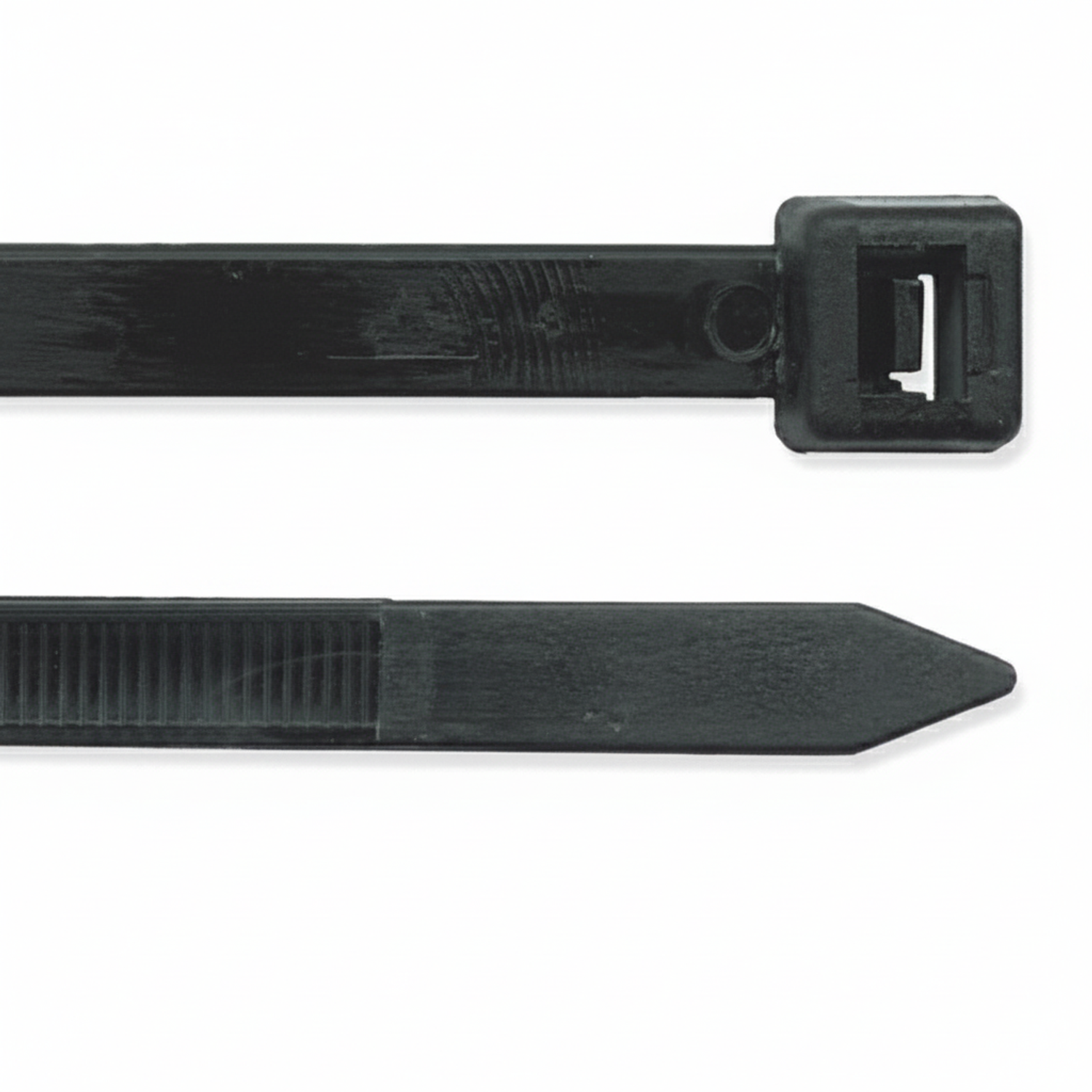
To combat sunlight-induced damage, manufacturers incorporate UV stabilizers and light-absorbing additives into the nylon formulation. These compounds interrupt the degradation cycle by either absorbing or neutralizing UV energy before it can attack the polymer chain.
There are three main types of UV protection mechanisms used in cable ties:
1. Carbon Black Pigment
This is the most effective and widely used additive in black UV-resistant cable ties. Carbon black particles act like microscopic shields that absorb UV light and convert it into harmless heat.
They also scatter radiation, reducing the amount that penetrates the polymer surface. Because carbon black is so effective, even a small percentage (typically 2–3%) can extend a cable tie’s lifespan by several years in direct sunlight.
2. Hindered Amine Light Stabilizers (HALS)
HALS compounds function differently — they don’t absorb UV energy, but instead neutralize free radicals generated during exposure. Think of them as molecular bodyguards that stop the chain reaction of polymer breakdown.
HALS additives are often used in clear or colored cable ties, where carbon black cannot be added without affecting appearance.
3. UV Absorbers (UVA)
These additives act like sunscreen for plastics. They absorb UV radiation and dissipate it as low-level heat before it can damage the polymer backbone. UVAs are particularly useful in combination with HALS, forming a dual layer of protection against sunlight.
Together, these additives drastically slow the rate of aging, keeping cable ties flexible, strong, and safe for long-term outdoor use.
Learn more:Weatherproofing Your Outdoor Furniture with UV-Resistant Zip Ties
Why Black Cable Ties Outperform Others
The reason black cable ties dominate outdoor environments is simple: carbon black is the most durable UV stabilizer ever discovered.
It’s chemically inert, thermally stable, and virtually immune to photodegradation itself. When dispersed evenly in nylon, carbon black forms a continuous protective layer that blocks UV light from penetrating deeper into the material.
Here’s what that means in real-world performance:
Cable Tie Type
UV Protection Additive
Typical Outdoor Lifespan
Common Applications
Natural Nylon 6/6
None
< 1 year
Indoor wiring, control panels
Colored Nylon
Minimal (dye-based)
1–2 years
Decorative or labeling use
Black Nylon (Carbon Black)
Excellent
5–10 years
Outdoor, solar, telecom, marine
UV-Stabilized Nylon
HALS + UV Absorbers
7–12 years
High UV exposure environments
This is why black cable ties are standard in solar farms, marine installations, construction sites, and telecommunications towers.
Understanding Nylon Degradation Without UV Protection
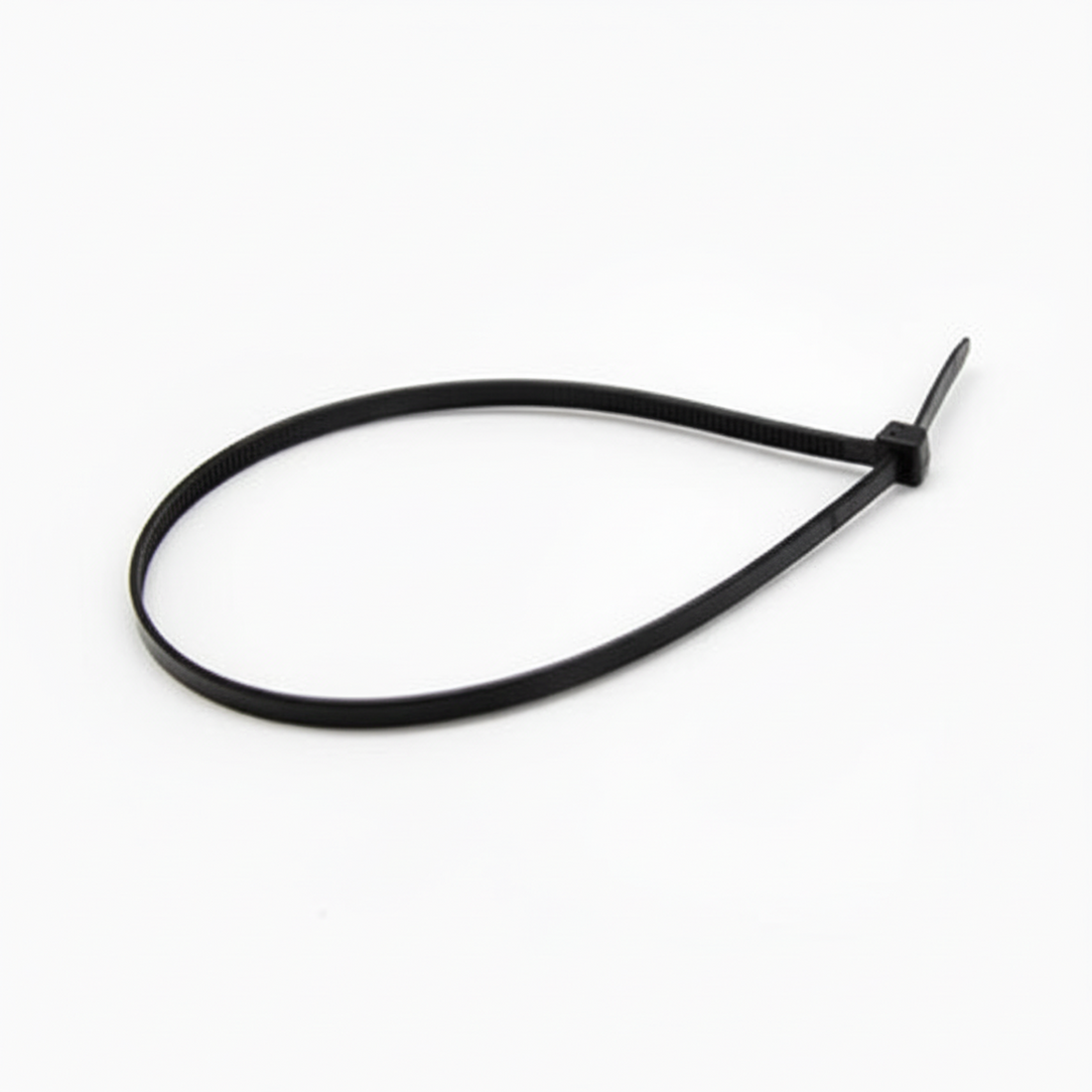
Let’s get microscopic for a moment.
When unprotected nylon is exposed to UV light, photo-oxidation begins at the surface. Oxygen in the air reacts with the excited polymer chains, producing peroxides and aldehydes that attack the molecular structure.
This reaction causes the polymer chains to shorten, making the material hard and brittle. At the same time, the surface develops a powdery layer — an early sign of oxidation. Once cracks form, the tie loses structural strength, even if it still appears intact.
In outdoor electrical installations, that kind of failure can cause:
Cable sagging or disconnection
Short circuits or data loss
Damage to wiring insulation
Increased maintenance time and cost
The chemistry of UV resistance directly translates to real-world reliability.
The Role of Temperature and Humidity
UV exposure rarely acts alone. Heat and moisture amplify degradation, especially in humid climates.
High temperatures accelerate the chemical reactions behind oxidation. Meanwhile, humidity affects Nylon 6/6, which absorbs up to 2.5% of its weight in water. This combination weakens molecular bonds even faster.
That’s why UV-resistant ties are often rated for wider temperature ranges — from -40°F to +185°F (-40°C to +85°C) — ensuring stability in both tropical and subzero environments.
Testing and Certification
Quality UV-resistant cable ties undergo rigorous testing under ASTM D4066 and UL 62275 standards. These protocols measure tensile strength retention, elongation, and color stability after prolonged UV exposure.
Manufacturers like HellermannTyton and Panduit often test products in xenon arc weatherometers — chambers that simulate years of sunlight, moisture, and heat within weeks.
A high-quality black UV-resistant tie should retain at least 80% of its tensile strength after 2,000 hours of simulated outdoor exposure.
Best Applications for UV-Resistant Cable Ties
Because of their durability, UV-stabilized and black nylon cable ties are the go-to choice for:
Solar panel wiring and conduit fastening
Outdoor electrical enclosures
Marine and dock installations
Construction scaffolding and temporary power lines
Telecommunications towers and antenna systems
Vehicle and trailer harnessing
Agricultural and irrigation equipment
In each case, the ties must endure long-term sunlight exposure without losing grip or flexibility.
Material Alternatives for Extreme UV Environments
Even with the best additives, nylon has its limits. For installations exposed to extreme sunlight, chemical exposure, or saltwater, alternative materials can perform even better:
ETFE (Ethylene Tetrafluoroethylene): Exceptional UV, chemical, and heat resistance — ideal for aerospace and solar farms.
PEEK (Polyether Ether Ketone): Ultra-high-performance polymer for extreme temperatures and radiation.
Stainless Steel: Immune to UV degradation, corrosion-resistant, and suitable for marine or offshore environments.
At Cable Ties Unlimited, we stock a wide range of UV-resistant and specialty materials for every condition — from mild outdoor use to the harshest industrial climates.
The Hidden Economics of UV Resistance
UV-resistant cable ties may cost slightly more than standard nylon, but their longer service life translates into real savings.
Replacing brittle, broken ties after every summer costs far more in labor and downtime than using a premium UV-stabilized option upfront. In solar and telecommunications industries, where reliability is critical, the cost-benefit equation is clear: durability always wins.
How to Maximize the Lifespan of UV-Resistant Cable Ties
Even the toughest UV-stabilized tie benefits from proper installation and handling:
Avoid over-tightening — it creates stress points that speed up cracking.
Use proper storage — keep ties sealed until use to prevent pre-installation aging.
Pair with mounting bases — they distribute load evenly and reduce vibration wear.
Clean mounting surfaces — for adhesive bases, ensure dust-free surfaces to maintain grip.
Inspect annually — replace any ties showing discoloration or microcracks.
Consistent maintenance helps ensure cables stay secure for the full service life of your installation.
The Cable Ties Unlimited Advantage
At Cable Ties Unlimited, we supply a full range of UV-resistant cable ties, mounting bases, and protective accessories built for tough environments. From carbon-black outdoor ties to stainless steel and ETFE options, every product is tested for performance, durability, and safety.
Whether you’re managing a telecom tower, marine vessel, or solar array, our specialists can help you select the ideal tie for your climate and application.
Final Thoughts
The secret to longer-lasting cable ties isn’t just better design — it’s better chemistry. Carbon black, HALS, and UV-absorbing additives transform ordinary nylon into a material capable of withstanding years of sunlight, moisture, and heat.
That’s why black cable ties have become the industry standard for outdoor work. They’re a simple, proven example of how smart materials science keeps even the smallest components performing reliably under the toughest conditions.
For more insights and tips on cable ties and other related products, explore cabletiesunlimited.com, get a quick and free quote, and follow us on our social media communities on Facebook and Instagram.
written By
Kyle Hinckley
Kyle Hinckley is a cable management specialist with over 15 years of experience in industrial and commercial
applications. He has helped hundreds of businesses optimize their cable infrastructure and improve workplace
organization.
About Cable Ties Unlimited
Cable Ties Unlimited represent one of the most cost-effective solutions for organization, repairs, and creative projects.
By thinking beyond their traditional use for cable management, you can discover hundreds of applications that
will save you time and money.
Get Expert Cable Management Tips
Join 10,000+ professionals receiving our weekly newsletter with industry insights, product guides, and
exclusive offers.


 To combat sunlight-induced damage, manufacturers incorporate UV stabilizers and light-absorbing additives into the nylon formulation. These compounds interrupt the degradation cycle by either absorbing or neutralizing UV energy before it can attack the polymer chain.
There are three main types of UV protection mechanisms used in cable ties:
To combat sunlight-induced damage, manufacturers incorporate UV stabilizers and light-absorbing additives into the nylon formulation. These compounds interrupt the degradation cycle by either absorbing or neutralizing UV energy before it can attack the polymer chain.
There are three main types of UV protection mechanisms used in cable ties:
 Let’s get microscopic for a moment.
When unprotected nylon is exposed to UV light, photo-oxidation begins at the surface. Oxygen in the air reacts with the excited polymer chains, producing peroxides and aldehydes that attack the molecular structure.
This reaction causes the polymer chains to shorten, making the material hard and brittle. At the same time, the surface develops a powdery layer — an early sign of oxidation. Once cracks form, the tie loses structural strength, even if it still appears intact.
In outdoor electrical installations, that kind of failure can cause:
Let’s get microscopic for a moment.
When unprotected nylon is exposed to UV light, photo-oxidation begins at the surface. Oxygen in the air reacts with the excited polymer chains, producing peroxides and aldehydes that attack the molecular structure.
This reaction causes the polymer chains to shorten, making the material hard and brittle. At the same time, the surface develops a powdery layer — an early sign of oxidation. Once cracks form, the tie loses structural strength, even if it still appears intact.
In outdoor electrical installations, that kind of failure can cause: