

When you need to tame a jungle of cables, protect them from damage, or just make your setup look sharp, cable sleeving is the answer. Among all the options out there, Polyethylene Terephthalate—or PET—cable sleeving stands out for its versatility, toughness, and professional finish.
So, what exactly is PET cable sleeving? Where should you use it? And why is it the go-to solution for so many installers, technicians, and hobbyists? Let’s break it down.
What Is Polyethylene Terephthalate (PET)?
Polyethylene Terephthalate, usually shortened to PET, is a strong, lightweight plastic. You’ve seen it everywhere: in water bottles, food packaging, and even in clothing. In the world of wiring, PET is woven or braided into sleeving that’s designed to slide over cables, wires, and hoses.
This material is chosen for cable sleeving because it offers a unique mix of flexibility, durability, and resistance to wear. The result? An easy-to-use cover that keeps cables protected and neat, whether you’re working in an office, an industrial plant, a car, or a custom PC build.
Key Features of PET Cable Sleeving
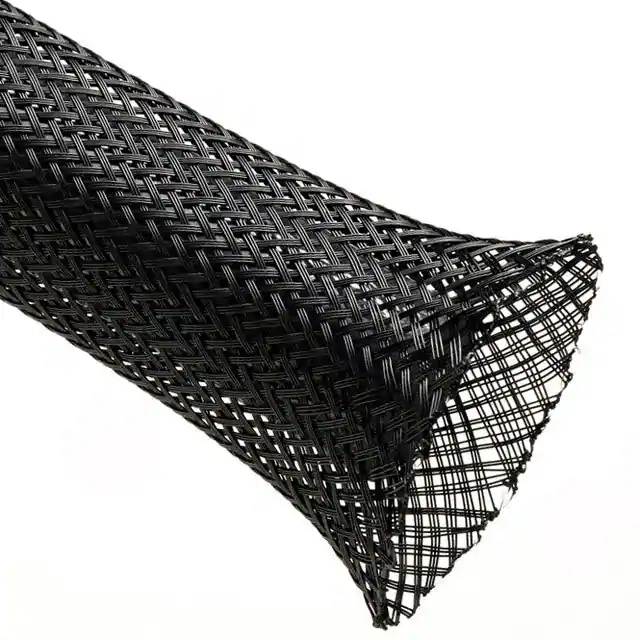
PET cable sleeving brings a lot to the table. Here’s what makes it such a popular choice for cable management and protection:
- High abrasion resistance: PET fibres form a tight, smooth weave that resists cuts, scrapes, and rough handling.
- Flexibility: The sleeving expands to fit over connectors and bends easily around corners without kinking.
- Lightweight: It adds almost no weight to your cable bundles, making it perfect for delicate electronics or automotive work.
- Wide temperature tolerance: Most PET sleeving works from -50°C to +150°C, so it’s just as reliable in a hot engine bay as in a cold server room.
- Chemical resistance: PET resists oils, cleaning fluids, and many common chemicals, so you can use it in tough environments.
- Moisture resistance: While not fully waterproof, PET doesn’t absorb water and dries fast if it gets wet.
- Easy installation: The braided design lets you push, pull, or snake sleeving over even the trickiest cable runs.
Where Is PET Cable Sleeving Used?
You’ll spot PET sleeving everywhere. It’s a favourite for:
- PC and electronics cable management
- Automotive wiring looms
- Robotics and automation
- Audio and video setups
- Industrial control panels
- Home theatre and AV installations
Anywhere you want clean, organised, and protected wiring, PET cable sleeving is up for the job.
How Does PET Cable Sleeving Compare to Other Options?
PET sleeving often gets compared to nylon, fiberglass, or PVC sleeves. Here’s how it stacks up:
| Property | PET Cable Sleeving | Nylon Sleeving | Fiberglass Sleeving | PVC Sleeving |
|---|---|---|---|---|
| Abrasion Resistance | Excellent | Good | Good | Moderate |
| Flexibility | Excellent | Excellent | Moderate | Good |
| Temperature Range | -50°C to +150°C | -40°C to +125°C | Up to 540°C (with coating) | -20°C to +105°C |
| Chemical Resistance | Good | Good | Very Good | Good |
| Water Resistance | Good | Good | Moderate | Excellent |
| Typical Uses | General, PC, auto, AV | General, auto, marine | High temp, industrial | Low-voltage, basic |
Pros and Cons of PET Cable Sleeving
Pros:
- Highly flexible; expands to fit a range of cable bundles
- Strong resistance to abrasion, cuts, and chemicals
- Lightweight and easy to install, even in tight spaces
- Withstands a wide range of temperatures
- Does not fray easily when cut properly (use a hot knife for clean edges)
- Available in many colors and diameters for easy cable identification
Cons:
- Not fully waterproof (but dries quickly if splashed)
- Not suitable for extremely high-temperature environments (use fiberglass for those situations)
- Can expand and contract, so securing the ends is important
Installation Tips for PET Cable Sleeving
To get the best from PET sleeving, use a hot knife to cut it—this seals the ends and prevents fraying. After sliding the sleeving over your cable bundle, secure both ends with heat shrink tubing, cable ties, or special clamps. This keeps the sleeve in place and stops it from sliding.
If you need to route cables through tight spaces or around corners, PET’s natural flexibility makes the job easy. Its open-weave design lets you run it over connectors and odd shapes without stretching or damaging the cables underneath.
Dos and Don’ts for Using PET Cable Sleeving
Dos:
- Do measure your cables before choosing sleeving size. A good fit means easier installation and better protection.
- Do use a hot knife or a proper heat tool for cutting. This seals the ends and stops fraying.
- Do secure both ends with heat shrink tubing, cable ties, or clamps. This keeps the sleeve in place and prevents it from sliding.
- Do use PET sleeving in environments with moderate heat, abrasion, or chemicals. It’s ideal for cars, electronics, home theaters, and industrial panels.
- **Do color-code your cables with different sleeving for easier identification and future troubleshooting.
- Do check the temperature and chemical ratings before using in challenging environments. Make sure PET is suitable for your specific application.
Don’ts:
- Don’t use PET sleeving in areas exposed to extreme heat. For very high temperatures, choose fiberglass or another specialized material.
- Don’t leave the ends unsealed. Open ends can lead to fraying and reduce protection.
- Don’t use PET sleeving as a substitute for waterproof protection in very wet or underwater environments. It resists moisture but is not fully waterproof.
- Don’t stretch the sleeving too tightly over cables or connectors. Over-stretching can cause wear or reduce flexibility.
- Don’t ignore proper installation steps just to save time. Taking shortcuts can compromise your cable protection.
Final Thoughts: The All-Rounder for Modern Cable Management
Polyethylene Terephthalate cable sleeving has earned its reputation as a go-to for anyone who cares about cable protection, neatness, and reliability. It offers the right balance of toughness, flexibility, and ease of use, making it ideal for everything from home offices to car engines to industrial controls.
If you want to tame your cables and keep them safe from life’s knocks, scrapes, and surprises, PET cable sleeving is the smart choice. It’s proof that sometimes, the simplest solution is the best one.
For more insights and tips on cable ties and other related products, explore cabletiesunlimited.com, get a quick and free quote, and follow us on our social media communities on Facebook and Instagram!